The Rise of the Robotic Lawnmower to Simplify Your Life
⚠️ Important notice: This article is based on draft legislation currently under discussion. To date, no binding Walloon decree on robot lawnmower operating hours has been officially adopted and published in the Belgian Official Gazette. The information below describes a legislative proposal, not an active legal obligation. We recommend consulting official publications before making any modifications to your equipment.
Key Takeaways from the Proposed Walloon Regulation
- Proposed nighttime ban: A draft Walloon decree aims to regulate the use of robot lawnmowers to protect hedgehogs, proposing a ban on their operation between 6:00 PM and 9:00 AM. This text is not yet legally binding.
- Lethal danger to wildlife: Robot mowers operating at night inflict severe injuries on hedgehogs, leaving them with virtually no chance of survival following amputation.
- Regional harmonization: If adopted, the proposal will replace a patchwork of municipal bylaws, providing a clear and uniform framework across Wallonia.
- Recommended adaptations: Should the text pass, owners will need to reconfigure their devices for daytime mowing, keeping agronomic factors (like dew and sunlight) in mind. In the meantime, this adjustment is highly encouraged to protect local wildlife.
The Intersection of Robot Lawnmowers and Ecological Realities
For years, garden automation has made a simple promise: reclaiming your free time by delegating tedious chores to tireless machines. Automated outdoor maintenance delivers pristine lawns with zero human intervention.
Capable of running day and night, these devices have long represented a form of absolute convenience for homeowners.
Today, however, this vision of technological comfort is clashing with a pressing environmental reality. The nocturnal activity of these machines—once seen as a perk because it prevented daytime disturbances—has proven devastating to small nocturnal wildlife.
In light of this, Walloon authorities have started looking for ways to reconcile technology with biodiversity conservation. A proposed legal framework is currently under debate and could soon redefine the rules for operating these devices. Pending official adoption, users are strongly urged to rethink their mowing habits to safeguard nocturnal animals.
Why Do Robot Lawnmowers Remain So Popular?
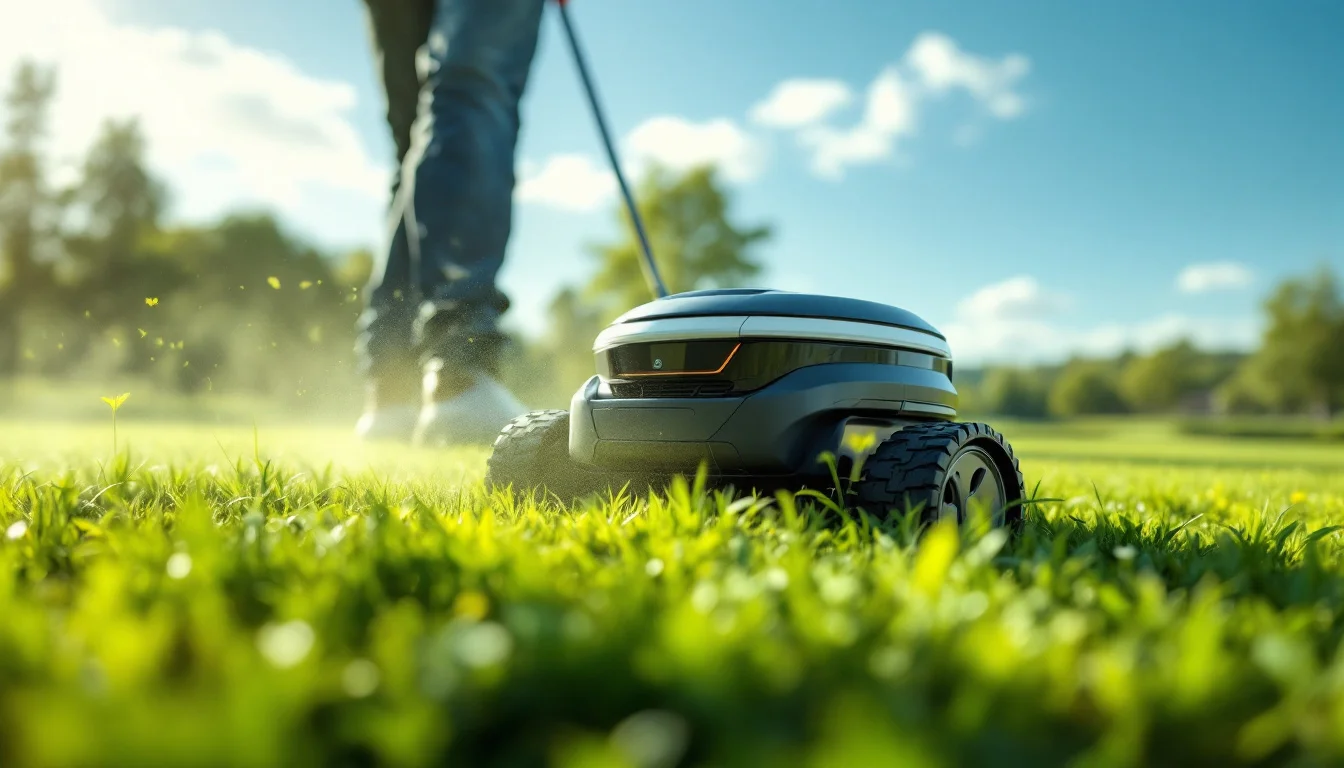
Despite these new time constraints, automated mowing still holds significant appeal. A robot lawnmower is a fully autonomous device designed to maintain green spaces without requiring any human oversight.
Equipped with an array of collision sensors and navigation algorithms, a robot lawnmower navigates your garden by dodging physical obstacles while constantly adjusting its path to ensure a perfectly even cut across the entire lawn.
Traditional upkeep of a large property demands countless hours of manual labor. By delegating this task, households reclaim valuable time. The machine takes on the burden of keeping outdoor spaces in immaculate condition, completely independent of the owners' schedules.
The Agronomic Benefits of Mulching
Beyond saving time, this device completely transforms how we approach fertilization through the technique of mulching. Instead of collecting the clippings, the grass is finely chopped and scattered directly back onto the soil.
These organic micro-residues instantly return essential nitrogen and minerals to the earth.
This natural cycle reduces the need for chemical fertilizers while helping the soil retain moisture during dry spells.
The high frequency of mowing passes encourages a thicker lawn, which naturally chokes out weed growth. Even within a restricted time window, the device actively supports a balanced plant ecosystem.
Why Might Nighttime Mowing Be Banned by a Future Walloon Decree?
A draft Walloon decree is considering regulating the use of robot mowers to protect hedgehogs by banning their operation between 6:00 PM and 9:00 AM. This proposal has not yet been officially adopted or published in the Belgian Official Gazette.
This move addresses a biodiversity crisis that has been unfolding in residential gardens for several years. At night, the garden turns into a vital hunting ground for many species, with the European hedgehog at the forefront.
There is a fundamental incompatibility between how these machines operate and the animal's biology. The hedgehog is a crepuscular and nocturnal species.
It becomes active precisely during the hours when homeowners typically schedule their mowing to wake up to a freshly cut lawn.
Why Is the Hedgehog's Defense Mechanism Ineffective?
When a threat approaches, a hedgehog doesn't run away. Its survival instinct tells it to freeze and curl into a ball, relying on the protection of its spines.
Unfortunately, this defensive posture is completely useless against the spinning blades of a motorized machine.
The aftermath of these nocturnal encounters is tragic. Robot lawnmowers operating at night inflict gruesome injuries on hedgehogs, leaving them with practically zero chance of survival after losing limbs or sustaining head trauma.
How Regional Harmonization is Replacing Municipal Bylaws
Before government intervention, managing this issue was left to local initiatives. Several municipalities had rolled out their own regulations regarding robot mowers.
These localized rules created a confusing patchwork. It wasn't unusual for a resident to face strict curfews while their neighbor, living just across the municipal border, could run their machine all night long.
This uniform regulation aims to simplify things for citizens. The proposed Walloon decree seeks to end this confusion by establishing a single, clear rule that applies to everyone, thereby making enforcement and compliance much easier, provided the text is definitively adopted.
What Exceptions Are Outlined in the Walloon Law?
Although the proposed rule is strict, lawmakers have carved out exemptions for highly specific situations where daytime mowing is either impossible or dangerous.
The decree includes two main exceptions. The first covers the maintenance of sports fields due to their unique scheduling constraints. The second applies to specific public safety scenarios, particularly around airports.
In a professional football stadium, constant daytime use makes running an autonomous machine unfeasible. Similarly, airport zones require closely cropped vegetation to deter birds from settling, which could pose a strike risk to aircraft.
In these designated areas, interventions are heavily regulated for security reasons. Outside of these precise exceptions, the draft dictates that every Walloon citizen must adhere to the 9:00 AM to 6:00 PM operating window, pending the text's official adoption.
How to Reprogram Your Robot for a Legal and Optimal Schedule
The ban on operating between 6:00 PM and 9:00 AM requires a complete overhaul of maintenance routines. Mowing in the middle of the day presents specific agronomic challenges that homeowners need to anticipate to keep their lawns perfectly healthy.
Creating an optimized schedule ensures legal compliance while maximizing the machine's efficiency. The primary hurdle for morning mowing is moisture.
By 9:00 AM—the time the device is finally allowed to roam again—the lawn is often still blanketed in dew, especially during the spring and fall. Wet grass clumps up under the chassis, clogs the blades, and drastically reduces the quality of the cut.
The Recommended Daytime Mowing Cycle
To make the most of this legal window, it's best to divide the day into strategic cycles. Here is a highly recommended setup:
- The late-morning cycle (10:00 AM – 12:00 PM): It is advisable to delay the first run by an hour. By 10:00 AM, the sun and wind have usually burned off the morning dew. Dry grass ensures a clean cut and perfectly dispersed mulch.
- The midday break (12:00 PM – 3:00 PM): The device should return to its docking station. Mowing under the harsh midday sun damages the grass. Cutting exposes the core of the grass blades to intense radiation, leading to rapid evaporation, heat stress, and a yellowing lawn.
- The afternoon cycle (3:00 PM – 5:30 PM): This second pass tackles the areas missed in the morning. The unit returns to its base thirty minutes before the 6:00 PM cutoff, safely preventing any accidental infractions.
This approach guarantees optimal maintenance while protecting your equipment and strictly adhering to environmental legislation.
What to Look For in a Robot Mower Suited for the New Legislation
The shifting legal landscape is changing the buying criteria for new machines. Since the operating window has effectively been slashed in half, any chosen device must offset this restriction with enhanced efficiency and smart features tailored for daytime mowing.
Connectivity has become an absolute must. The companion mobile app needs to offer granular scheduling, allowing you to set strict timeframes (such as 10:00 AM–12:00 PM and 3:00 PM–5:30 PM) without the risk of an unintended launch.
A model lacking this scheduling flexibility puts its owner at risk of involuntary infractions.
What Wildlife Protection Technologies Are Available?
Manufacturers are developing new technological workarounds to make their devices safer to operate:
- AI-powered cameras: The latest generation of mowers is moving away from basic collision detection in favor of computer vision. They can visually identify a motionless animal on the lawn and reroute their path well before making contact.
- Chassis design: Machines featuring ultra-low protective skirts and highly sensitive bumpers are highly recommended. A lowered design gently nudges an obstacle out of the way rather than rolling over it and engaging the rotary blades.
- Battery capacity and cutting width: To cover the exact same area in half the time (the 9:00 AM to 6:00 PM window), the unit needs superior battery life or a wider cutting deck to minimize the required number of passes.
Frequently Asked Questions (FAQ): Regulations and Robot Lawnmowers
Does this regulation apply in Brussels and Flanders?
Currently, this decree applies exclusively to the Walloon Region. However, nature conservation groups are urging residents nationwide to adopt this curfew voluntarily to help protect nocturnal wildlife.
Are other pets (dogs, cats) in danger during the day?
Pets are generally alert and active during the day. Unlike a hedgehog, a dog or cat will instinctively back away from the noise and approach of the machine. Nevertheless, keeping an eye on younger animals while a mowing cycle is active is always a good idea.
What are the penalties for violating the curfew?
If the decree passes, operating a machine outside the permitted timeframe (6:00 PM to 9:00 AM) would constitute an environmental infraction. No penalties are currently enforceable since no legal text has been officially published in the Belgian Official Gazette.
Conclusion: How Can Technology Adapt to Wildlife?
The proposed Walloon regulation proves that technological innovation cannot operate in a vacuum, detached from its surrounding ecosystem. If enacted, this curfew would force a more respectful coexistence between human convenience and the biological rhythms of local wildlife.
Yet, technology continues to march forward. The rapid democratization of AI-powered vision sensors raises a fascinating question for the coming decade.
If machines learn to flawlessly identify and maneuver around living creatures with a 100% reliability rate, strict legal time constraints might eventually evolve. Until then, it is up to humans to mandate—through laws and custom settings—a respect for nature that electronic circuits still fundamentally lack.