Travel & Discovery: Off-the-Beaten-Path Destinations
What is "Quiet Luxury" in the Travel Industry?
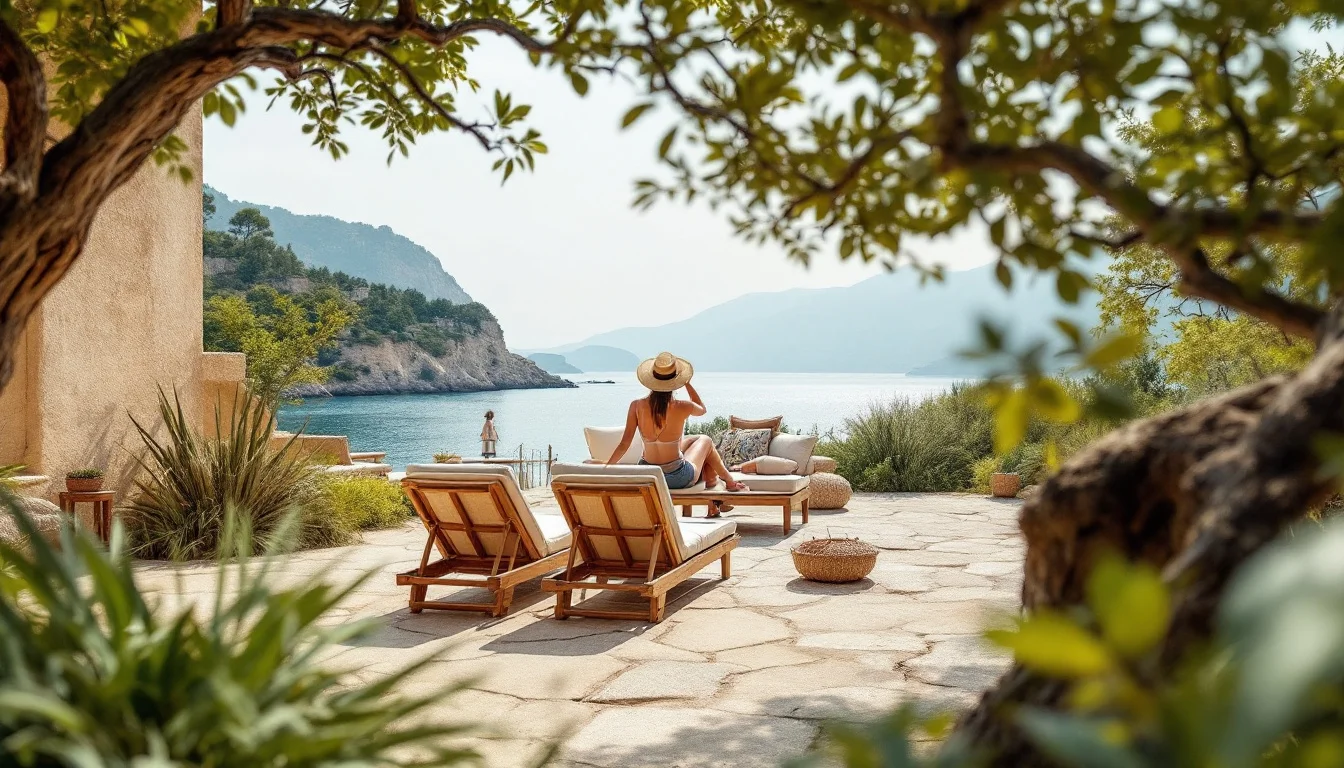
For decades, the travel industry has conflated exclusivity with ostentation. Palatial hotels, overcrowded destinations, and a frantic accumulation of activities long defined the pinnacle of the tourist experience for many travelers. However, another approach is gaining momentum: tranquil luxury (or quiet luxury).
In a hyper-connected, image-saturated world, the true privilege for devotees of this trend is measured by the rarity of silence, the stretching of time, and the purity of isolation. This stripped-back luxury redefines our relationship with escapism. It is about prioritizing contemplation over consumption and seeking out sanctuaries where nature and cultural authenticity remain intact. Escaping urban density and mass-market circuits has become a primary quest for this demographic of vacationers.
The geographical universality of this concept means it can take on many forms. Vast, silent expanses don't always require crossing multiple time zones. While the majestic isolation of the Uzbek steppes, Georgian valleys, or the cliffs of the Faroe Islands embodies this philosophy on a global scale, the experience is equally accessible closer to home. Just a few hours' drive away, the Belgian Ardennes offer havens of peace of remarkable intensity. This guide takes an objective look at how "quiet luxury" is redefining how we discover the world.
Key Takeaways
- A redefinition of privilege: True luxury today, according to this approach, lies in disconnecting, seeking silence, and slowly immersing oneself in pristine landscapes far from the tourist frenzy.
- Escapism on two scales: Vast, faraway spaces (Georgia, Uzbekistan, the Faroes) share the same philosophy of authenticity as local retreats located just a stone's throw from home.
- Local refinement: The smallest town in the world, Durbuy, is located in Belgium, just an hour and a half from Brussels, and boasts a charming historic center characterized by cobblestone streets.
- A matter of timing: Spring (March to May) is ideal for visiting Ghent, Leuven, or Bruges, while summer (June to August) is perfect for the Belgian coast (De Haan) and hiking in the cool Ardennes.
How Majestic Isolation Looks on a Global Scale (Georgia, Uzbekistan, Faroe Islands)
Stepping away from heavily trafficked capitals to observe the rugged majesty of remote territories is a core tenet of slow travel. Georgia, Uzbekistan, and the Faroe Islands perfectly illustrate this quest for isolated locales.
Why Choose Georgia for a Caucasian Adventure?
Nestled at the crossroads of Europe and Asia, Georgia is a country brimming with natural and heritage treasures.
High up in the Caucasus, the Svaneti region is a notable, albeit remote, destination. It is famous for its medieval stone towers standing starkly against snow-capped peaks. The villages of Mestia and Ushguli are living testaments to an ancient culture. Hikers here are rewarded with spectacular trails, enveloped in a silence that only high altitudes can provide.
Further east, the Kakheti region invites you to embrace an epicurean slowness. As the cradle of viticulture for over 8,000 years (according to documented historical and archaeological data), it offers the chance to taste unique wines produced using ancestral methods. To the south, the Samtskhe-Javakheti region unveils the cave city of Vardzia, carved directly into the cliffs, and the Borjomi-Kharagauli National Park, where lush forests encourage you to take a deep, grounding breath.
What Do the Faroe Islands Offer for Rugged Isolation?
Nestled in the North Atlantic between Iceland and Norway, the Faroe Islands form an archipelago of 18 officially recognized volcanic islands. It is a world where nature has carved sheer cliffs, verdant valleys, and dramatic waterfalls that plunge directly into the ocean.
The Faroese experience is first and foremost auditory: the crash of the waves and the cries of seabird colonies, including the famous Atlantic puffins. Whether you are a beginner or a seasoned hiker, there are trails for every level, with only a few free-roaming sheep for company. The tranquility here allows for a complete disconnect from the frantic pace of daily life. The local gastronomy, showcasing fresh fish and wild herbs, perfectly complements this raw natural environment.
What Treasures Does Uzbekistan Hold Along the Silk Road?
In the heart of Central Asia, Uzbekistan offers a cultural and spiritual dimension to slow travel. Exploring this country means walking in the footsteps of the legendary Silk Road without being constantly jostled by mass tourism.
Cities like Samarkand, Bukhara, and Khiva are veritable open-air museums. Samarkand dazzles with its majestic mausoleums and the imposing Registan Square. In Bukhara, narrow alleys and the impressive Ark citadel make you feel as though you are reliving the era of the great caravans. Khiva, a walled city boasting a rich historical setting, offers an environment perfectly suited for contemplation.
Beyond its architecture, it is the natural landscapes, such as the Nuratau Mountains or Lake Aydar, that provide the sense of peace unique to vast, unspoiled expanses.
Where Can You Find Quiet Luxury within Driving Distance in Belgium?
While distant expeditions possess an undeniable allure, contemporary travel proves that you don't always need to cross oceans for a true change of scenery. The rise of slow travel is also casting a spotlight on local heritage. Belgium hides several gems that embody this search for space and time.
What Makes Durbuy So Appealing?
To find an intimate refuge, sometimes you only need to look toward the southern part of the country. Durbuy, famously known as the smallest town in the world, is located in Belgium, just an hour and a half from Brussels, and boasts a charming historic center lined with cobblestone streets.
This high concentration of heritage architecture makes it a prime point of interest. Far from being a mere tourist stopover, Durbuy is best experienced as an all-encompassing aesthetic journey. Its beautifully preserved town planning and limestone facades are a standing invitation to stroll and linger.
How Does the Local Art of Living Manifest Itself?
The quiet luxury of this region shines through its attention to detail and a craftsmanship that honors unhurried time. A stay in the area is proof that an escape—rooted in both comfort and raw beauty—can be found right on the doorstep of Europe’s major capitals.
Why Choose the Ardennes and the Semois Valley for a Nature Immersion?
The geographical appeal of a soothing getaway isn't limited to stonework and built heritage. If you're looking to reconnect with a rawer, wilder intensity, the Ardennes massif offers a striking forested alternative. Isolation here is defined by woodlands and winding rivers.
What Is There to Discover in the Semois Valley?
This winding territory is a green expanse perfectly suited for breaking away from urban routines. The Semois Valley, located in the Belgian Ardennes, is an ideal natural region for canoeing and hiking, featuring notable sights such as:
- The Pont de Claies
- The Frahan viewpoint
- The Tombeau du Géant (Giant's Tomb)
- The Passerelle du Moulin de l’Epine
- The Bouillon Castle
Exploring these viewpoints is best enjoyed at a leisurely pace. Gliding across the water in a canoe at dawn, when the morning mist wraps around the conifers, is a rare sensory experience. The Tombeau du Géant, with its spectacular natural geometry, commands silence and a profound respect for the great outdoors.
What Are the Top Spots to Explore in Vielsalm?
Further northeast, Vielsalm in the Ardennes represents another stronghold of quiet luxury, notably featuring:
- Lake Doyards
- The Maison du Pays de Salm (folklore museum)
- Regional restaurants like Le Gastromme or Contes de Salme
Here, warm hospitality goes hand-in-hand with local gastronomy that is fiercely proud of its roots, making for a humble yet deeply rejuvenating getaway.
Which Quiet Luxury Destination Fits Your Profile?
Choosing an off-the-beaten-path destination ultimately depends on the personal expectations of each traveler. Are you looking to radically break away from your daily routines, or to rediscover your immediate surroundings?
This comparative matrix analyzes the highlighted destinations based on the core pillars of "quiet luxury": the nature of the isolation, the required level of disconnection, and the signature experience.
| Destination | Type of Isolation | Level of Disconnection | Signature Experience (Slow Travel) |
|---|---|---|---|
| Faroe Islands | Rugged and Oceanic | Total (physical break) | Local birdwatching |
| Georgia / Uzbekistan | Cultural and Historical | High (language barrier) | Slow traversal of the steppes and architectural immersion |
| Ardennes (Semois Valley) | Forest and River | Moderate (accessible proximity) | Misty hike to the Tombeau du Géant |
| Durbuy / Vielsalm | Curated and Heritage | Gentle (comfort and refinement) | Strolling through cobblestone alleys and local fine dining |
- The radical option: For those who need a clean break from their daily lives, international destinations (the Faroes, Central Asia) demand a complete physical and mental reset.
- The close-to-home option: For tighter schedules, the Ardennes and Durbuy offer an excellent travel-time-to-escapism ratio, allowing you to easily unwind over a simple weekend.
What Is the Ideal Strategic Calendar for a Trip to Belgium?
Quiet luxury isn't just a matter of geography; it also relies on time management. Being in the right place at the right time allows you to better grasp the true atmosphere of a locale. To explore Belgium in optimal conditions, travelers can look to the seasons as a guide.
When Is the Best Time to Visit the Flemish Art Cities?
Spring (March to May) is highly recommended for visiting Ghent, Leuven, or Bruges. During this period, the Flemish cities are emerging from winter without having yet reached their peak summer crowds. The spring light playing on the canals of Bruges or the beguinages of Leuven provides a stunning backdrop for photography and leisurely strolls.
Why Opt for the Coast and the Ardennes in Summer?
Summer (June to August) is the time to enjoy the Belgian coast (De Haan) and the cool freshness of the Ardennes for hiking. While parts of Europe swelter in the heat, the North Sea coastline and the Ardennes canopy offer a much more temperate, comfortable climate.
The village of De Haan (Le Coq), with its Belle Époque architecture, maintains a wonderfully human-scaled seaside ambiance. Concurrently, the cooling forests of the Semois Valley make it easy to enjoy moderate physical activity under a protective leafy canopy. Mastering these seasonal nuances is key to a truly comfortable stay.
Frequently Asked Questions (FAQ) About Quiet Luxury
What is "quiet luxury" when it comes to travel?
Quiet luxury is a travel approach that prioritizes authenticity and taking one's time over flashy, ostentatious symbols of wealth. It is characterized by seeking out destinations with a slower pace of life, nature-based experiences, and genuine connections with local heritage.
Does isolated tourism require a massive budget?
Isolation and disconnection can actually be highly affordable. Exploring the Semois Valley or discovering the Georgian mountains often requires more organization than extreme financial means. The priority is placed entirely on the tranquility of the space itself.
How can I avoid the crowds in nearby destinations?
Favor the shoulder seasons (spring or early fall) for urban visits, and save the summer for forest massifs or specific small seaside villages, aiming for periods outside of peak school holidays.
How Can You Adopt the Slow Travel Mindset?
A segment of the high-end travel industry has evolved to meet this new demand for escapism. While many logically prefer the buzz and dense cultural offerings of bustling capitals, quiet luxury proves that a sense of wonder can also be found in slowness and the rarity of silence.
Whether it takes the form of a hike across the high Caucasian plateaus or a canoe trip down the winding curves of the Semois, this type of tourism is defined not just by geography, but by the traveler's attitude. By planning your getaways through the lens of disconnection, you can design journeys entirely focused on listening to and observing your environment.