Meditation for Beginners: A Guide to a Calming Practice
How does meditation fit into everyday life?
Meditation is still too often perceived as a mystical practice, strictly reserved for Tibetan monks or reclusive yogis. Yet, far from the clichés of out-of-reach asceticism, it has emerged as a fundamental tool for mental hygiene in our modern society.
In Belgium, the wellness market has become highly structured to meet a growing demand, directly linked to the acceleration of our lifestyles. For beginners, taking the leap into meditation is increasingly less about a purely spiritual quest. Above all, it is about acquiring a method for personal crisis management.
Faced with professional pressures and family demands, sitting in silence for a few minutes becomes an act of mental self-preservation. The practice requires neither expensive equipment nor an idealized environment. It adapts to confined city spaces, fragmented schedules, and saturated minds.
This guide aims to demystify the approach to meditation, anchoring it in the reality of daily Belgian life and showing that there is a technique tailored to every modern need.
What are the key takeaways?
- An accessible and diverse market: From Brussels to Wallonia, the offerings have become democratized to suit all budgets and profiles.
- Pragmatic goals: The contemporary approach primarily aims to reduce stress and tangibly improve quality of life.
- Tailor-made methods: Mindfulness, yoga nidra, or somatic relaxation offer different entry points depending on an individual's level of exhaustion.
What are the fundamentals for breaking the myth of the empty mind?
In this section, we explain why meditation is not about achieving an absolutely blank mind.
For a beginner, the main barrier to learning meditation stems from a persistent misconception: the belief that you must completely empty your mind. This demand for mental silence inevitably breeds frustration and pushes many practitioners to quit. The goal is absolutely not to eliminate thoughts, but to change our relationship with them.
Understanding mindfulness
As explained by Hasina, a mindfulness initiation teacher in Molenbeek-Saint-Jean (Brussels): mindfulness is about focusing your attention on what is happening in the present moment without judgment. This distinction is crucial. By observing the flow of your mind without trying to block or analyze it, you free yourself from the pressure to perform.
The importance of physical grounding
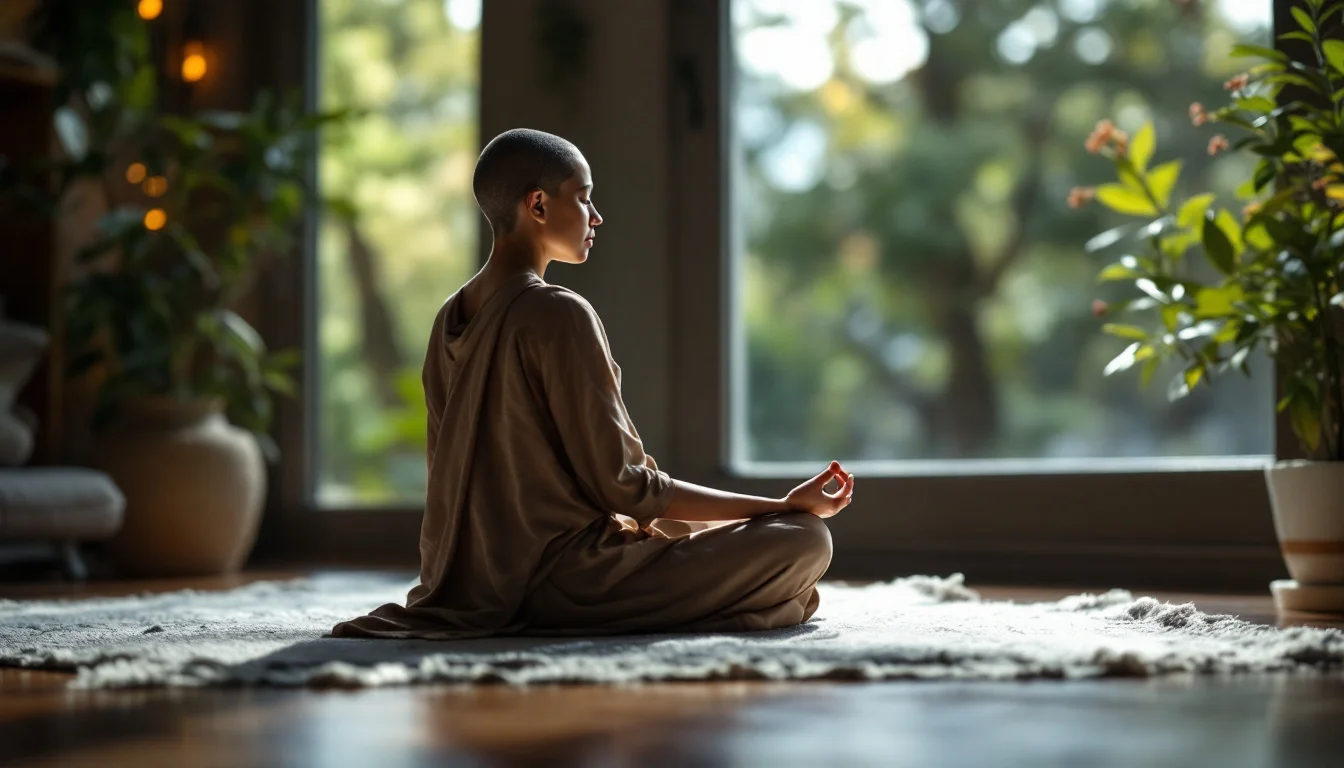
Posture plays a fundamental role in this process. While meditation can be practiced walking or lying down, sitting remains the most highly recommended posture for beginners. A straight yet relaxed back promotes alertness while preventing drowsiness.
Breathing then becomes the main anchor point. By focusing on the natural rhythm of your inhales and exhales, you continuously bring your mind back to the present moment. Whenever a thought arises, simply acknowledge it and gently redirect your attention to your breath.
Starting gradually
It is highly advisable to start with very short formats. Sessions of five to ten minutes are more than enough to accustom your nervous system to this new state of presence. Over the weeks, this duration can be extended naturally, without forcing it, as the initial discomfort gives way to mental calmness.
Why has meditation become essential for combating burnout and insomnia?
In this section, we analyze how meditation addresses contemporary mental health challenges. Historically associated with personal development or spiritual awakening, meditation's status has radically shifted over the past decade. Today, it stands on the front lines against the health crises of our time.
An antidote to professional collapse
The typical profile of a beginner meditator in Belgium has evolved. It is no longer just people in search of "zen," but adults seeking to stem a crisis of overwork. The practice is becoming a preventative measure, encouraged by many mental health professionals.
In an environment of constant digital distraction where boundaries between private and professional lives blur, the brain is kept in a state of toxic hypervigilance. Meditation steps in as an intentional circuit breaker, allowing the sympathetic nervous system (responsible for the stress response) to calm down.
Immediate and measurable benefits
The approach of these new practitioners is highly pragmatic. For them, the goal is to reduce stress, improve sleep, soothe anxiety, or simply reconnect with a more stable, everyday presence. By restoring genuine restorative rest, meditation helps break the vicious cycle of insomnia and mental load.
This reframing of the audience shows that learning to meditate is not a time-consuming luxury, but rather an essential coping skill for surviving the demands of an increasingly overwhelming professional and family world.
How to choose a meditation method for beginners?
In this section, we provide an analytical framework for selecting the most suitable approach for your needs. Today, the term "meditation" encompasses a multitude of very different approaches. For a beginner, this vast array of choices can be paralyzing. To avoid getting discouraged by the wrong technique, it is essential to choose a method that matches your current physical and mental state.
If you are exhausted and physically tense
When the body is locked up by stress and exhaustion is looming, traditional seated meditation can be too demanding. It is often better to lean toward approaches that incorporate the body.
- Somatic relaxation: This method uses slow movements and body awareness to release deep tension. Personalized sessions combining meditation, breathwork, and somatic relaxation for adults are available for €48 (e.g., in Uccle).
- The Alexander Technique: At the crossroads of postural re-education and physical mindfulness, the Alexander Technique, taught for €70 (e.g., in Rixensart), helps reduce stress, improve posture, and prevent burnout.
If your mind is racing in loops
For people suffering from severe anxiety or an uncontrollable stream of thoughts, total silence can be daunting.
- Guided meditation (Yoga Nidra): Often referred to as "yogic sleep," this practice is done lying down. A voice guides the practitioner's attention through different parts of the body. It is an excellent gateway for very restless minds that need to be "held by the hand."
If you are looking for daily grounding
- Mindfulness: This is the most secular and scientifically studied method. It is ideal for those who want to integrate a simple daily routine, based on observing the breath and accepting the present moment.
This matrix helps clarify that there is no such thing as a "bad" meditator, only methods that may be temporarily unsuited to a specific level of stress.
What budget should you plan for learning to meditate in Belgium?
In this section, we decode the rates charged on the Belgian market. One of the major barriers to learning guided meditation is the lack of price transparency. However, there is a vast range of options available, allowing every financial profile to get started under good conditions.
A diverse local offering
The private coaching ecosystem is well developed. In 2024, there are 18 private meditation teachers in Belgium listed on the Apprentus platform, offering strong territorial coverage from the capital to the surrounding municipalities.
Initiation pricing scale
The cost of learning heavily depends on the chosen format (group vs. individual) and the spiritual depth of the method:
| Format and Method | Price Range | Location | Target Audience |
|---|---|---|---|
| Group classes (Hatha yoga and yoga nidra) | €12 | Immersive audiovisual spaces | Small budgets, seeking occasional relaxation |
| Mindfulness Initiation (Private lesson) | €34 | Molenbeek-Saint-Jean | Curious beginners, learning the basics |
| Somatic Relaxation (Targeted coaching) | €48 | Uccle | Adults looking for physical and emotional release |
| Indo-Tibetan Meditation (Advanced coaching) | €99 | Wallonia/Brussels | Practitioners seeking a spiritual and traditional immersion |
Decoding market prices
This price gap is explained by the nature of the commitment. Group classes in Hatha yoga and yoga nidra (guided meditation) are available for €12 in immersive audiovisual spaces, representing an excellent starting point with no financial risk.
Conversely, if you want to learn how to structure your own practice independently, a mindfulness meditation initiation class is offered for €34 in Molenbeek-Saint-Jean (Brussels). Finally, for a much more comprehensive approach, an Indo-Tibetan meditation teacher offers coaching for €99, a rate that reflects long-term philosophical transmission.
How do you overcome the common obstacles of the first few weeks?
In this section, we address the frequent difficulties encountered by novices. Even with the right method and a suitable teacher, starting meditation is paved with resistance. The most consistently highlighted obstacle remains a lack of time.
Integrating the practice into the pockets of your daily routine
It's an illusion to wait for a perfect, free hour to get started. The key lies in weaving meditation into the margins of your schedule. If you work from home, take the first five minutes of your lunch break to sit down, close your laptop, and focus solely on your breath. If you commute, a train ride is an ideal moment to listen to a yoga nidra session with your headphones.
Embracing the initial discomfort
The difficulty of sustaining attention is another massive source of discouragement. During the first few weeks, the mind rebels against stillness. This is a completely normal process. The frustration of "doing it wrong" must be acknowledged, then set aside.
Holding steady through this phase of discomfort is crucial. Rather than aiming for long, perfect sessions, prioritize frequency. Three minutes a day will always be more effective than a forty-minute session done once a month.
Frequently Asked Questions (FAQ) About Meditation for Beginners
What are the real benefits of meditation?
The benefits are numerous and appear quickly if the practice is regular. Mentally, it helps lower anxiety levels and reduce mental load. Physically, it significantly improves sleep quality and helps release muscle tension caused by chronic stress. Note that meditation is a complementary practice and does not replace professional medical care.
Where can you find suitable classes in Belgium?
The options are vast, ranging from traditional yoga studios to matchmaking platforms for private tutors. Municipalities in Brussels (Molenbeek, Uccle, Etterbeek) and Wallonia (Rixensart) boast a large number of practitioners offering classes at home, in-studio, or via video conference.
How much does a meditation initiation cost?
The budget varies widely. You can start with guided group sessions for around €12. For an individual mindfulness initiation, expect to pay around €34. More therapeutic (somatic, posture) or spiritual coaching ranges between €70 and €100.
What is the first step to start meditating?
In this section, we summarize the ideal mindset for getting started. Beginning meditation requires neither a radical lifestyle change nor adherence to a complex belief system. Above all, it is a pragmatic commitment to your own mental health, especially necessary in an age of constant overstimulation.
Whether you choose mindfulness to calm your anxieties or somatic relaxation to soothe an exhausted body, the key is to take action without feeling guilty. Today, the Belgian market offers solutions that are varied and financially transparent enough for everyone to find their fit.
The best advice for starting out remains experimentation. Treat yourself to a simple initiation session near you; sit down, breathe, and let the practice reveal its benefits to you at its own pace.